How City Districts Shape Prague's Cultural Infrastructure
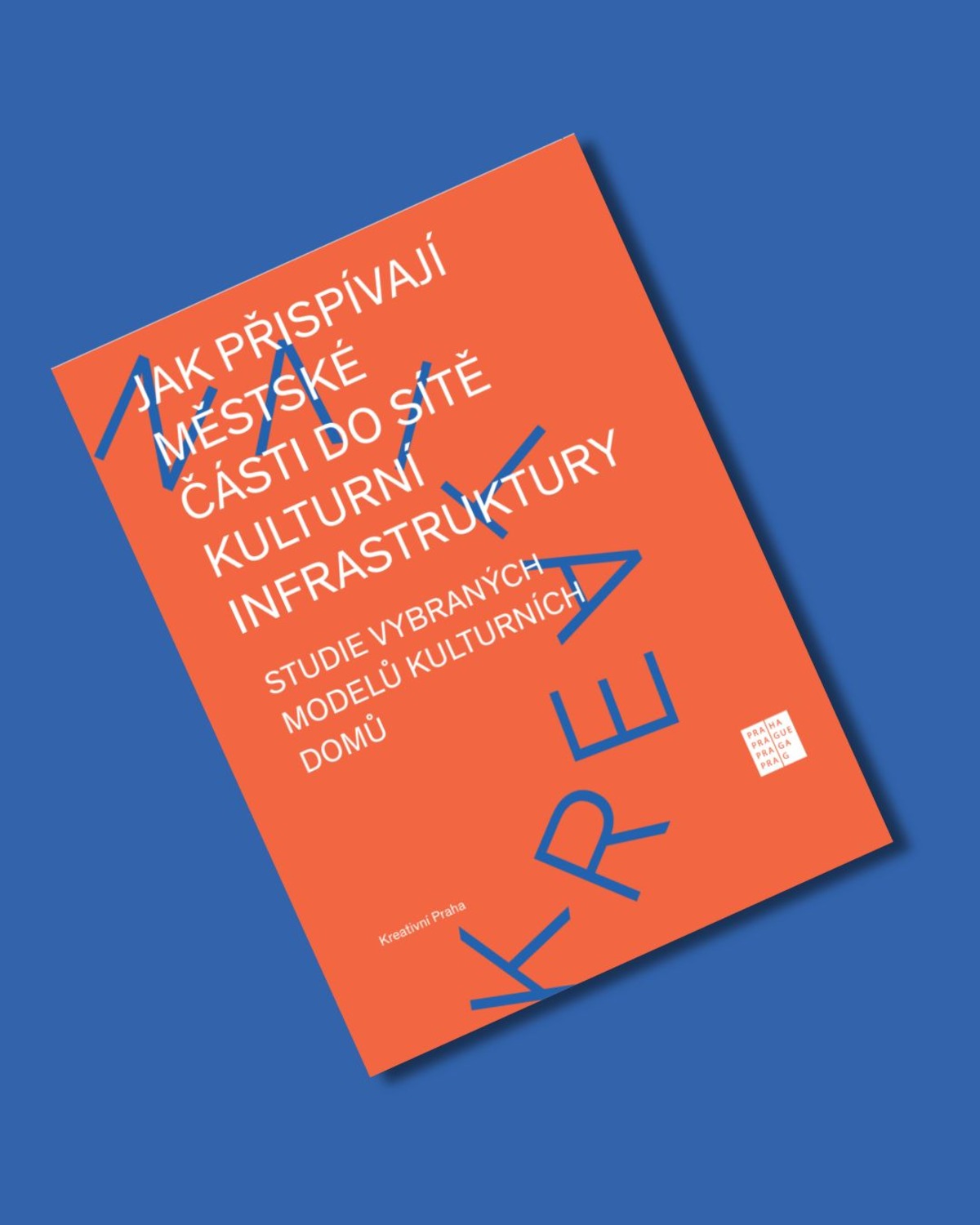
New study How Urban Districts Contribute to the Cultural Infrastructure Network: A Study of Selected Models of Cultural Houses brings a detailed view of it, how the cultural infrastructure in Prague is distributed, what legal and operational forms it has and how it is financed. At the same time, it offers concrete examples from practice and opens up questions of further development of local culture.
Culture close to home: where the cultural infrastructure is concentrated
The description of the cultural infrastructure is based on freshly updated data for MAPK — Prague map of culture and includes more than 700 cultural facilities of various types.
It is confirmed that cultural infrastructure has a natural tendency to concentrate in the city center, where you can find most theaters, galleries, museums and concert halls. Conversely outside the centre — particularly in peripheral and smaller urban areas — forms the backbone of the library's cultural offerings and cultural-community centres. It is these facilities that are crucial to the daily cultural and social life of local residents and often represent the only cultural background in a given locality.
Placement of cultural facilities in Prague:

Source: Creative Prague (2025)
Different legal forms, different options
The study also goes into detail legal and operational models of cultural facilities. In Prague, cultural facilities operate in a wide variety of forms. We focused on the more common ones and, with the help of interviews with the leadership of selected representatives of these organizations and representatives from among the authorities, we investigated the limits and advantages of each model.
Each of these models has its advantages and limits:
- Contributory organizations offer stability and funding certainty, but face higher administrative burdens and less flexibility.
- Registered Associations allow for greater programmatic freedom and quicker responses to community needs, but often face the uncertainty of short-term funding.
- Limited liability companies deliver operational flexibility and tax benefits, but have limited access to public subsidies.
- Inscribed Constitutions are proving to be a workable trade-off between stability and autonomy in some urban areas.
Share of cultural facilities in Prague by legal form

Source: Creative Prague (2025)
Research confirms that there is no one ideal model — the appropriate legal form always depends on the local context, the size of the district, the character of the building and the ambitions of the cultural establishment and the city district.
How much city districts are investing in culture
An important part of the study consists of the analysis of the financing of culture at the urban level. The data show that spending on culture is very uneven between urban parts — both in absolute terms and in per capita terms.
While the average current expenditure on culture is around CZK 350-400 per capita per year for small and large urban areas, the differences between urban areas are significant. Some invest more than a thousand crowns per person in the culture, others are well below the limit of one hundred crowns.
Another finding is that investment in cultural infrastructure is rather bumpy and heavily dependent on subsidy calls or specific projects. In addition, the Covid-19 pandemic caused a significant slump in investment, from which cultural infrastructure has not yet fully recovered.
Cultural facilities as a support for local communities
In addition to charts and maps, the study also provides qualitative insights from interviews with the leadership of cultural organizations and representatives of urban areas. These show that cultural facilities in individual neighbourhoods today fulfil a much broader role and function than simply hosting cultural events.
They are a meeting place, education, neighbourhood activities and cooperation with schools, associations and other actors. It is in this role that their importance for the Cohesion of communities and quality of life in individual neighbourhoods.
Data as a basis for further development
Study How urban districts contribute to the cultural infrastructure network offers to urban areas, cultural organizations and other actors hard data and concrete examplesthat they can lean on when planning the development of culture.
At the same time, it confirms that cultural infrastructure works as an interconnected ecosystemwhere individual models and types of devices can complement each other. The role of urban areas in this system is irreplaceable — not only as funders, but also as partners who create the conditions for the emergence and sustainability of local culture.